I see I have been referenced on wikipedia
https://en.wikipedia.org/wiki/Shanna
Some great tales behind the names of Irish rivers.
Tuesday, September 5, 2017


Friday, September 1, 2017
JOB WILKS AND THE RIVER
(Michael Coady)
.
"...of the 56th
regiment, who died accidentally by drowning, at Carrick-on-Suir, 17 July 1868,
in his 28th year."
.
I feel that I know you, Job
Wilks -
No imperial trooper
swaggering
these servile Tipperary
streets
before my grandfather drew
breath,
but a country lad out of
Hardy
drunk on payday and pining
for Wessex,
flirting with Carrick girls
in fetid laneways after dark
out of step on parade to
Sunday service
with comrades who loved you
enough
to raise out of soldiers' pay
this stone
which would halt my feet
among nettles
now that jackdaws are free in
the chancel,
Communion plate lies deep
in the dark of a bank vault,
and spinster daughter of the
last rector,
in a home for the aged,
whispers all night to an only
brother
dead these forty years in
Burma.
.
How commonplace, Job Wilks,
how strange
that this should be where
it would end for you,
twenty-eight
summers after the midwife
washed you.
With that first immersion
you took your part
in the music of what happens,
and an Irish river was
flowing
to meet you, make you
intimate clay
of my town.
.
On a July day of imperial sun
did your deluged eyes find
vision of Wessex, as Suir
water
sang in your brain?
.
I know the same river you
knew, Job,
the same sky and hill and
stone bridge:
I hope there were Carrick girls
with tears
for a country lad out of
Hardy,
drunk on payday and pining
for Wessex.
Tuesday, August 29, 2017
some of my publications as listed on irishinterest.ie
https://www.irishinterest.ie/?searchinput=ronan+gearoid+O+domhnaill&search=#searchresults
Thursday, August 24, 2017
Fadó Fadó Copies still available

I still have a few copies of Fadó Fadó available. As its self-published, it not readily available in shops. Its reasonably priced at 15 Euro including postage and packaging. If interested drop me a line on contact email on this site.
Sunday, July 30, 2017
Folk Cures of North Galway
Between
1937 and 1939 the Folklore Commission began a unique and invaluable project to
collect different aspects of Irish folklore. In order to do this they requested
the help of primary school teachers throughout the Irish Free State. More than
50,000 school children from 5,000 schools took part in what became known as the
Schools’ Project which is now being made available for public consumption on
the internet.
In
neat handwriting in both English and Irish, national school pupils, after
consulting their relatives and neighbours, wrote about folktales and legends,
riddles and proverbs, games and pastimes, superstitions and cures of their
local area. They form a portal to another era and much of what they wrote down
has long since being forgotten and highlight a time when people lived very
closely with the land. Today we go to
the health food shop and buy overpriced goods to maintain our health but people
a hundred years ago knew how to find these things in nature. Nettles were
boiled and eaten during the month of March to purify the blood. Burdock
or cradán as it was also known was boiled and drunk to do this
as well. Wild carrot was used for kidney trouble. Chicken weed heated very hot
was applied to swellings and sores. Bleeding was stopped with cobwebs and fine
feathers.
One
of the ledgers I consulted was compiled by school teacher Eibhlín Halliday of
Knockroe, Dunmore, County Galway and the folk cures described in it interested
me the most. She had a keen interest in folklore and it is clear from the
ledger that she had been collecting them for years and many of the cures were
told to her by her grandparents. Reference is made to ‘long ago’ and writing in
1937 this would be going back to the first half of the 19th century.
People were a lot more superstitious in the early 20th century
and the ledger contains a description of a woman in Carrnagur who had the evil
eye and still born children were believed to have been taken by the
faeries. We learn about the ailments people suffered from at the time.
The most deadly one was consumption, otherwise known as TB, which was a major
affliction in the country until Noel Browne tackled the problem in the 1950s. People suffering from consumption were encouraged to drink
donkey’s milk. A child suffering from the whooping cough was placed under a
donkey’s stomach. Another cure involved boiling a mouse in milk and having the
child drink the milk. The soup from a boiled hedgehog was also believed to be a
cure. Alternatively the advice of man on a white or grey horse was sought and
followed. Those suffering from boils let a snail crawl onto the afflicted area.
Turpentine was placed on loaf sugar and given to children suffering from worms.
A toothache could be cured by boiling a frog and drinking the liquid. People
with ankle sprains placed their leg under a waterfall and this eased the pain
as indeed did goose lard rubbed on the afflicted area. There were healing men
who would utter incantations as they performed their healing. Eibhhlín
Halliday’s grandmother had turf mould in her eye and went to healer in
Claddagh, Tuam. He placed a glass of water on a table and bade her sit close to
it. He then muttered an incantation and the turf mould appeared in the glass
and she was cured immediately.
Towards
the end of the Great War Europe was ravaged by the Spanish flu. Although
not terribly well remembered, more than 20,000 Irish people died until it
subsided in 1919. People carried garlic around with them which was believed
would ward off the fatal flu. Though not mentioned in the project, another cure
for the Spanish flu was whiskey.
In Kilkerrin,
school teacher Caitlín, Bean Uí Chuimín described a cure for warts. The
afflicted person wrote their name on a rag with a burnt tick and burnt the rag
secretly. It was believed that the warts would disappear as the rag
burnt. A cure for a sore throat was believed to be found by heating salt and
putting it on cloth tied around the neck or putting boiled potatoes in sock and
tying it around the neck. Ring worm could be cured with a mixture of sulphur
and unsalted butter. A herb known as buachaillí
an tighe could cure sore eyes. A
fox's tongue was used to remove thorns. A sprain could be cured by
wrapping a snáithe leónta, a type of woollen string and accompanied
by prayers wrapped around the afflicted area for nine days. Those suffering from headaches would have their head
measured three times on three different occasions as they believed that their
head might have actually split. Warts could be washed before
sunrise in the water found in a particular bullaun stone blessed by St Patrick.
A bullaun stone was a hole in a rock, and its water was believed to have
curative properties. Drinking water from a holy well before sunrise was
believed to have general curative properties though some such a well in
Boyounagh graveyard were believed to specifically cure warts. Boiled nettle
juice was believed to cure measles.
Faith healers
such as a seventh son of a seventh son were more common and could cure by
merely touching the afflicted area. Some people believed that they only had
curative powers if something was placed into their hand immediately after birth
before being placed on their mother’s breast. A worm placed in his hand would
ensure he could cure scurvy while a herb would give them the power to cure
cancer.
The cures are to
the modern world bizarre but would have been tried and trusted and passed down
several generations. The power of belief is the most important cure. My own
grandmother used to make an ointment which was known to cure burns, the
ingredients of which were known only to the women of the family. At her funeral
last year, I was impressed by the amount of people who proclaimed how the
ointment had cured them of their affliction.
All of the above
cures were taken from different ledgers of the schools project which is
available to view free of charge on the dúchas website at www.duchas.ie. More ledgers can be
viewed at the folklore collection, stored at the UCD library in Dublin.
Monday, July 24, 2017
Ringfort
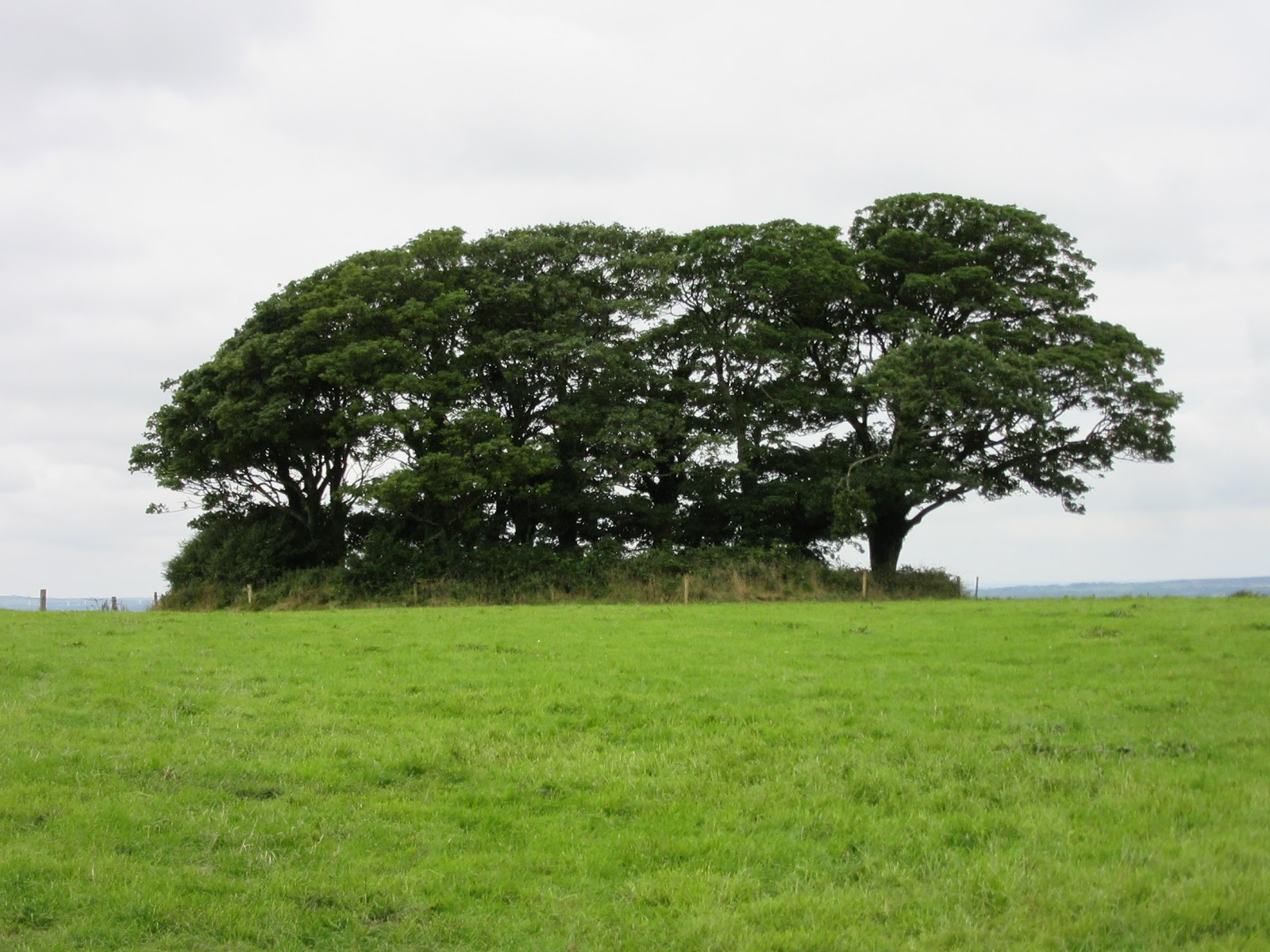
The above picture shows a ringfort, of which there are several thousand on the island. It may also have been used as a cillín or cemetery for unbaptised children. They survived through the ages as they were regarded as sacred places and dwellings if the sí or faerie. The example shown here is in North Kerry and commands a view of six counties.
Kenmare Stone Circle
 |
| Kenmare Stone circle with a rag tree. I am unsure however if a rag tree is an established tradition or something recently created by or for tourists? It is one of few stone circles located so close to a town. Admission to the site is two euros. |

Subscribe to:
Posts (Atom)