Monday, August 11, 2014

The Church of Saint Nicholas, Galway


In the heart of medieval Galway is the 14th century church of St Nicholas, the patron saint of sailors. The photos here show a small fraction of the monuments on display. The Lynch memorial window-the heads of the angels were apparently smashed when the church was occupied by Cromwellian troops who used the church as a stable and ransacked the city in the 17th century.
Around 750 men from Galway city and county fell in the Great War. The Celtic Cross, hidden away in this church is their only monument.
The crusader grave for a knight called Adam. It predates the church by about fifty years and whoever prays for his soul will have forty days less to spend in purgatory.
The remnants of a flag, the proud banner of “The Devil’s Own” as the Connaught Rangers were known.


Wednesday, July 30, 2014

Clonmacnoise

 Two Irish chieftains as depicted on the cross of Scriptures.
 A bullaun stone.It is said to cure warts.
 The Cross of Scriptures(the real one).
 The Cross of Scriptures (copy)
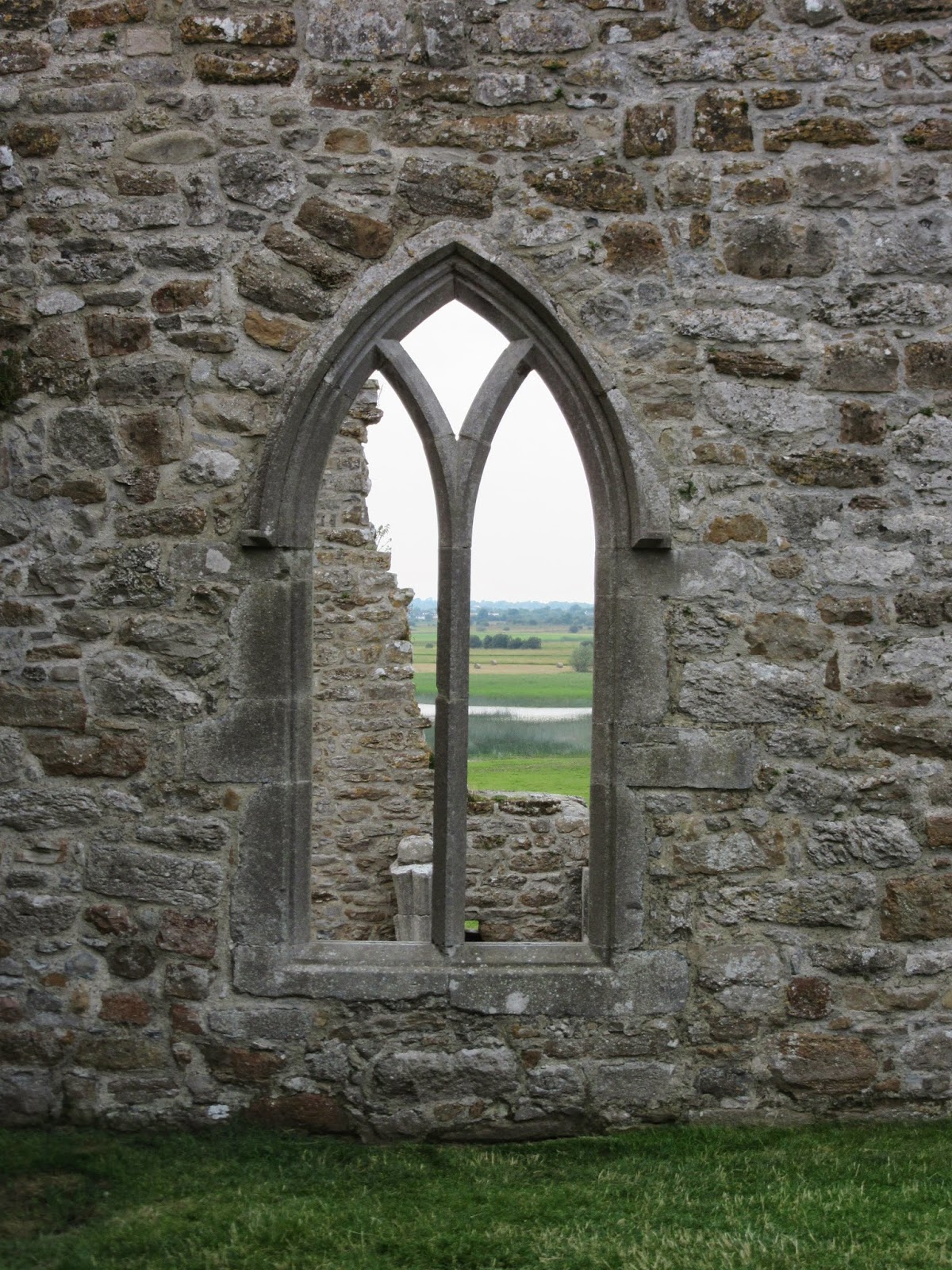
A window in the cathedral

Clonmacnoise

 Colman Bocht (poor)
The foundation of Clonmacnoise with St Ciarán on the left and Diarmait mac Cerbaill on the right, whom Ciarán foretold would become High king of Ireland which came to pass. Diarmait was the last High King who took part in the banfheis to marriage to the Goddess of the land.
The North Cross which has a disputed depiction. The figure is possibly Cernunnos, the horned God of the woods, also found on the Gundestrup cauldron.

Clonmacnoise

Aodh (pronounced like 'eh'), son of the chief of Oriel and the first recorded pilgrim to Clonmacnoise. He died on arrival in the year 606.


The remains of a Norman castle which guarded the Shannon crossing. It was blown up by English parliamentarian soldiers in the 17th century. Only when nine red haired Egan maidens dance around it will it crumble entirely.


One of two round towers at the site. This particular one 
was destroyed by lightning in 1024.

King Puck


The Puck festival of Killorglin, County Kerry. Truly, one of Ireland's more bizarre festivals which takes place every August. Nobody knows how old it is, but its veneration of a goat may suggest pagan roots.

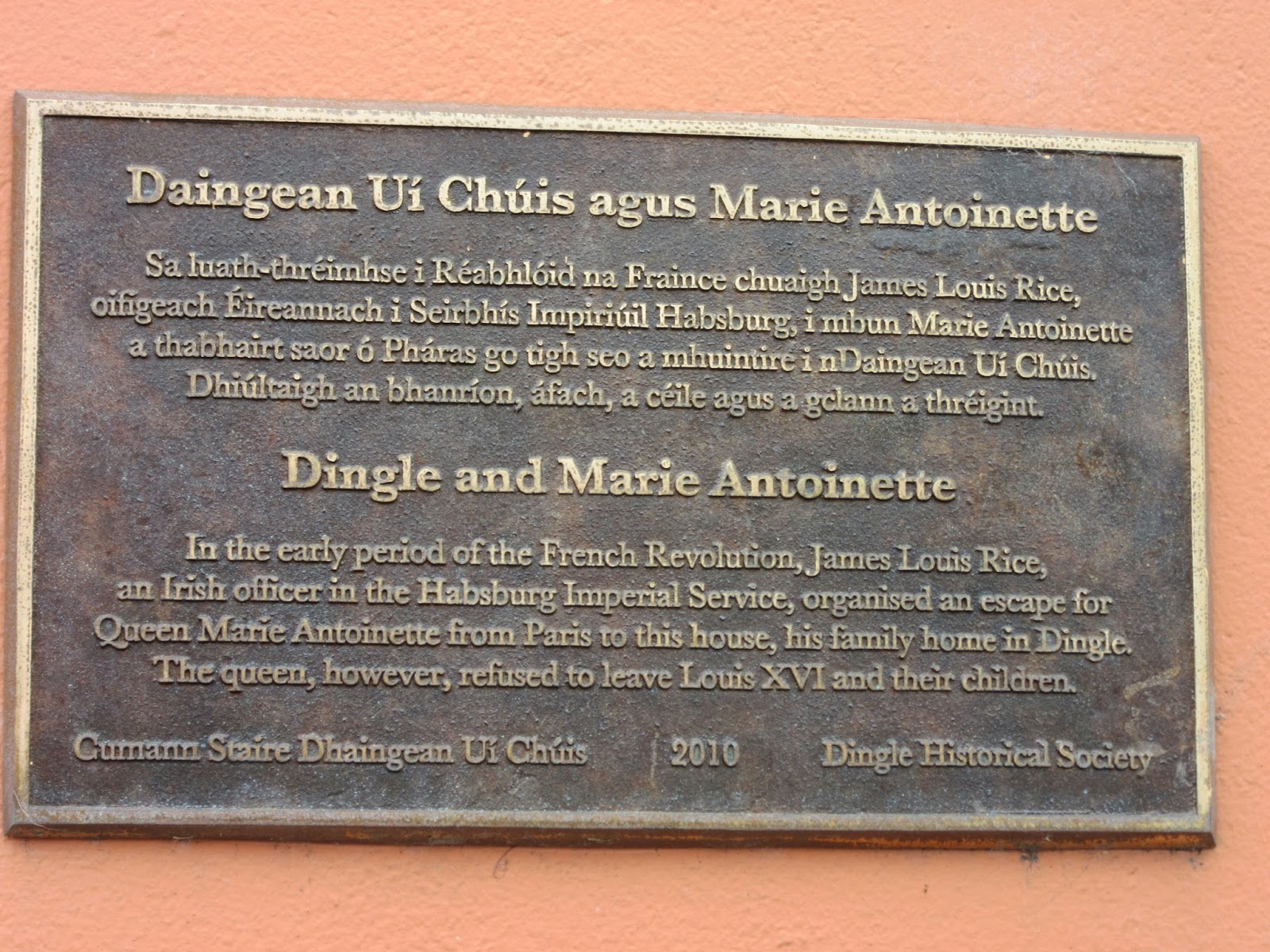
Marie Antoinette and Dingle

This unassuming Georgian house in Dingle was refurbished inside in the French style in preparation for an important guest-Marie Antoinette. It was one of several plans to free the royal family and a Kerryman had a ship waiting to take her to Dingle. Everything was planed and the jailers had been bribed, but she she refused to leave her family. For more see page 107 of Fadó-Tales of Lesser Known Irish History.

Irish Palatines


Adare, County Limerick-Aunty Lena's Pub, established in 1806, a remnant of the German Palatines.
See page 72 of Fadó-Tales of Lesser Known Ireland.