The Irishman who became patron saint of Austria
By
Rónán-Gearóid Ó Domhnaill
(first published in Word October 2006)
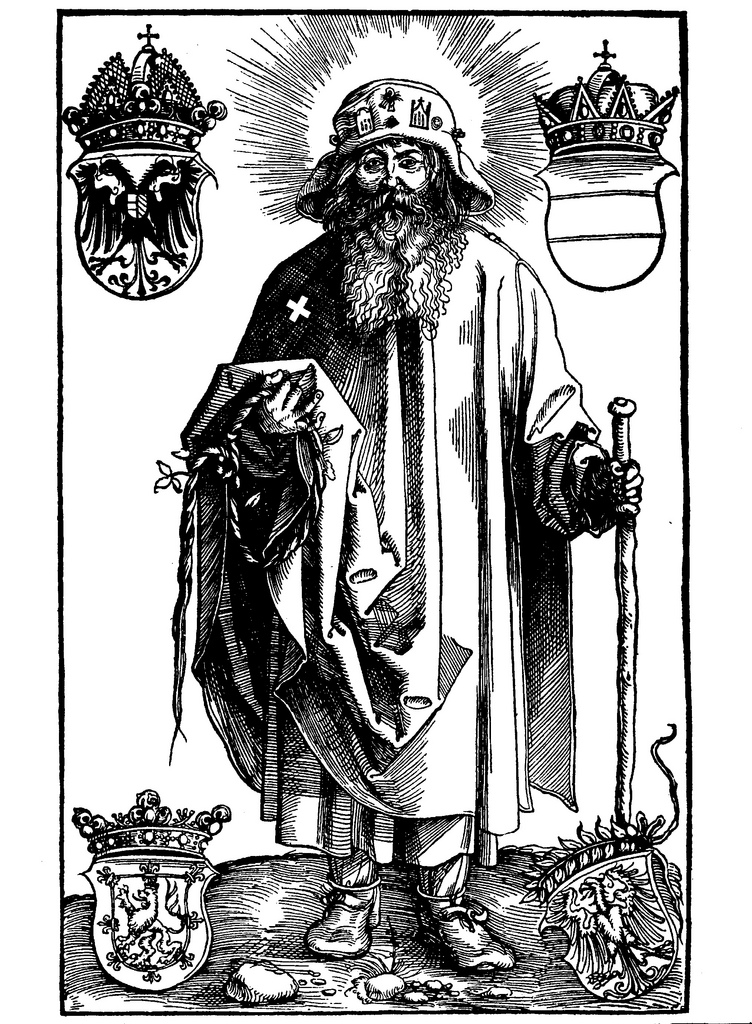
Until 1663 when he was replaced by Saint Leopold the patron saint of Austria was an Irish man, Saint Colman.
Very little is known about who exactly he was though it is believed that he was a king’s son from somewhere in the south of Ireland. It was the year 1012 when a stranger calling himself Colman or Coloman wandered into the village of Stockerau, North of Vienna. He was on his way to the Holy land when his horse lost a shoe and he needed the service of the local smithy.
In a time when people did not venture far from their native villages and everyone knew everyone, strangers stood out. This particular stranger spoke a strange tongue and wore strange clothes. The neighbouring Bohemians had often attacked the area and the villagers took Colman to be one of their spies sent to do a reconnaissance.
Perhaps bitter and angry with previous incursions a mob gathered around the Irishman and he was thrown into jail where they tortured him but to no avail. He wouldn’t talk their language and persisted in speaking his unknown language. They brought him before the local judge but Colman’s attempts to explain himself as Gaeilge and with gestures made no impression on the judge who sentenced him to death by hanging.
He was dragged to barren elder tree and they hanged him there between two murderers.
It was the usual practice of the time to leave the corpse hanging to act as a deterrent. In the case of Colman his body hung on the elder tree for eighteen months.
Unlike the other corpses however, it did not decompose and it appeared to be as fresh as the day he died. Nor had the ravens and crows plucked out his eyes. The barren elder tree had also started to blossom. The villagers wondered at this but more was to come.
In the village there was a man called Rumaldus and his son suffered from severe gout. Rumaldus could do nothing about it until one night he was told in a dream to rub the afflicted area with a piece of flesh from a hanged man’s body. It was a common belief at the time that a hanged man’s body brought luck and cured certain ailments. Very often certain bodily parts were removed for this purpose. This is exactly what Rumaldus did and the corpse he chose was Colman’s. While he was cutting off a piece of flesh warm blood flowed out as if the body was still alive. He brought it home and the afflicted area had scarcely been rubbed three times when the boy stood up and was cured. Truly amazed by what had happed Rumaldus went back to where Colman was hanging and is reported to have seen that there was no trace of any incision made on the corpse.
The locals took this as evidence that Colman was no spy, but a holy man. They realised then that they that they had being a bit hasty in hanging the stranger and had treated him with great injustice. The least they could now do was to give him a decent Christian burial and he was buried it in a small church nearby. Not long after this his origins could be established when one of Colman’s servants traveling from Ireland, trying to trace the whereabouts of his unfortunate master, turned up in the village.
The village basilica was not to be Colman’s final resting place. The following year The Danube broke its banks and flooded the entire area causing massive destruction. The only place that the water shunned was Colman’s grave, which remained a green dry island. The local prince was deeply impressed upon hearing this and decided to the holy man’s body in re-interned in more suitable surroundings. It is said that when his grave was opened a smell arose that gave joy to all who smelt it and that the body still had shown no signs of decomposition. Thus the remains were transferred to Melk in 1014. Leopold II of Austria made Melk into a Benedictine monastery in 1089 and Colman, though never officially canonized became its patron saint.
Word spread of the saint’s remains and people travelled from afar to see them. A Colman cult thrived and no less than four popes granted indulgences to those who evoked his name. It was highly desirable for a nobleman to have holy relics in his kingdom and tended to increase his standing greatly.
Perhaps with this in mind King Stefan of Hungary wanted the remains to be brought to Hungary. When his request was turned down he threatened to start a war. In order to avoid bloodshed the Austrian’s reluctantly handed over the remains. The Hungarians were ecstatic that the miracle worker’s remains had come to their country. Instead of a blessing however Stephan’s kingdom was hit by plagues and famine, which the king believed to be an act of punishment and he had the remains returned to Melk in 1016.
Colman became patron saint of Austria in 1244. He also became patron saint of those sentenced to death by hanging, travellers and cattle, protected against foot ailments and the plague. Popular images of him show a man wearing pilgrim’s clothes of hat, cloak, and walking stick and are still quite numerous.
He was not only revered in Austria, but also in Bavaria, Swabia and Hungary, where several churches bear his name. Farmers’ daughters used to call upon him to send them a good husband.
Though he was replaced as Austria’s national saint by Saint Leopold in 1663 he still retains popularity. There is still an annual blessing of horses and cattle at Melk on his feast day on the 13 October. It is not only in Melk that traces of Colman are to be found. Beside the North side entrance of Vienna’s famous St. Stephen’s cathedral there is a stone, which once had traces of blood on it. This is said to be the stone on which Colman was executed.
Though it seems hard to believe that a single Irishman could have accidentally attracted so much attention he is still revered today a thousand years after his execution. In recent years
He has become a symbol of the need for us to listen to one another. He looked different and spoke differently and such people still arouse suspicion and can very easily fall victim to intolerance.
I like to write a few articles in my free time. Some have been published and some have not. Most of the articles are Ireland related and generally of a historical or cultural nature. I may be contacted through the email on this site.
Tuesday, July 27, 2010
Hermann Goertz
Hermann Görtz- from Berlin to Ballivor
By
Rónán-Gearóid Ó Domhnaill
While Hitler’s plans on Ireland are still regarded as at a matter of speculation he did send a number of spies into the country. It was of great concern to the allies that the Free State would be used to transmit weather reports, useful for U-Boats to Germany, or indeed that neutral Ireland become a safe haven for spies to infiltrate Britain. The most famous of these spies was Dr. Hermann Görtz (1890-1947).
Görtz had fought in the First World War and had interrogated allied prisoners, a skill that would later have its use. After the war he trained to be a lawyer and went to England on his own bat in the 1930s to write a book on the expansion of the RAF or so he would claim at his trial for spying at the Old Bailey in 1935. He was accompanied by a secretary, nineteen year old Marianne Emig, who posed as his niece. They lived in Broadstairs, Kent and the pair befriended a local RAF man, one Kenneth Lewis, whom they duped into giving information. He was amazed at how much they knew about the RAF and when he became concerned about telling them military secrets Görtz assured him that England and Germany would be on the same side in the next war. His ‘nice’ maintained regular correspondence with Lewis and was happy to get photos of RAF planes which the unwitting Lewis sent her.
When the landlord of the house Görtz had been renting called by he found a note his tenant had left out, which he believed referred to Göertz’s motorbike. Believing that someone had stolen the motorbike while Görtz was away, the landlord rang the police. They searched the property but did not find the motorbike. What they did find was maps and drawings of the local RAF bases. Emig was in Germany when Görtz was arrested and under the circumstances was reluctant to return to England. His trial attracted considerable media attention at the time and he was sentenced to four years. Following his release in 1939 he was deported back to Germany.
In 1940 Britain faced a serious threat of invasion and in May of that year Görtz parachuted into Ireland as part of a fact finding mission which had been given the codename Operation Mainau. He landed at Ballivor, Co. Meath, although he was supposed to have landed in Tyrone. He was wearing his Luftwaffe parade uniform and First World War medals. Still dressed in his uniform he went to the local Garda station to find out where he was and look for directions. The Guards seemingly found nothing unusual about the apparition that appeared before them and gave him the necessary directions. He then walked the eighty odd miles to Laragh County Wicklow, the home of Iseult Stuart wife of Francis Stuart daughter to Maud Gonne. In Berlin Francis Stuart had told him that if he ran into difficulty he was to go to her and he now availed of the offer.
From Wicklow he went to Dublin to meet IRA activist Stephen Carroll Held at number 245 Tempelogue Road. Held, having first made contact with Oscar Pfaus from the Abwehr, the German secret service, had travelled to Germany a few weeks previously to deliver to the Abwehr, Plan Kathleen.
Plan Kathleen was a grandiose plan conceived by IRA man Stephen Gaynor, which outlined a proposed invasion of the north, similar to the invasion of Norway and was approved of by Stephen Hayes acting chief of staff of the IRA.
As part of the plan an amphibious assault was to be made at Lough Swilly and German paratroopers would land in the Divis Mountains and Lisburn, while the IRA would attack from the south at Leitrim. The plan called for 50,000 German troops, but contained no details of coastal defences in the North or other vital information. The Abwehr had been told that the IRA in Ireland was 5,000 strong and all that they needed was guns, which they wanted to be brought ashore along the west coast.
Görtz, who had looked at the plan a fortnight before dropping into Ireland, thought it somewhat far fetched. He wanted the IRA to cease hostilities in the Free State, where they were more active than in the North, and concentrate their energy on fighting the British. He was shocked to find that the IRA was not the guerilla movement he had been told it was. He found it to be unreliable and completely disorganized. In terms of numbers it seemed nowhere near the amount he had been told in Berlin. It proved to be more of a liability to the Germans and other German spies were told to avoid contact with the IRA.
While Görtz was staying with Held, the house was raided on 22 May. While Görtz escaped through the back garden Held was not so fortunate and was given a given a five year prison sentence for his involvement in the affair. The guards found $20,000 in the house as well of details on Irish harbours, bridges and the distribution of the Defence Forces. The plans for Plan Kathleen were also uncovered and handed over to the British.
Görtz managed to stay at large until November 1941. When a known IRA man, Pearse Paul Kelly visited Stuart’s house, the guards raided and arrested both Kelly and a German who called himself Heinrich Brandy. Brandy soon revealed his true identity to be Hermann Görtz. Stuart was also taken into custody. She was imprisoned for a month, but was acquitted when brought before a court.
Görtz was not the only spy to arrive in Ireland. Others such as Günther Schütz were sent to collect weather reports and assess the affect of German bombing in the north. He was supposed to be dropped off at Newbridge in September 1940 but landed in Wexford and was arrested almost immediately. It is possible that this was the intention. The news of German spies arriving in Ireland would unsettle the Allies. Although the agents were informed in depth about Ireland by the professor of Celtic Studies, Ludwig Mühlhausen, they had very poor English and were bound to stand out. None of the spies were allowed to associate with German prisoners of war in the Curragh. Schütz tunneled his way out of Mountjoy in 1942 and found refuge in an IRA safe house. He was later recaptured and survived the war. Following this escape attempt Görtz and the other spies were transferred to Costume barracks in Athlone, where they spent the rest of the war.
In 1946, Görtz applied for asylum, but his application was turned down. He was released the following year and went to live with
Bridie and Mary Farrell. His days however in Ireland were numbered. On May 23, 1947 he was requested to report to the Aliens’ Office in Dublin, where he was told a plane was ready to return him to Germany. Knowing that he would probably face a prison sentence or worse in occupied Germany, he swallowed his poison capsule and died within a few seconds. He was buried in Dublin and later re-interned in the German cemetery at Glencree in 1974, where tucked away in a corner, his grave marked by a sword and wrapped in ivy he found his final resting place.
By
Rónán-Gearóid Ó Domhnaill
While Hitler’s plans on Ireland are still regarded as at a matter of speculation he did send a number of spies into the country. It was of great concern to the allies that the Free State would be used to transmit weather reports, useful for U-Boats to Germany, or indeed that neutral Ireland become a safe haven for spies to infiltrate Britain. The most famous of these spies was Dr. Hermann Görtz (1890-1947).
Görtz had fought in the First World War and had interrogated allied prisoners, a skill that would later have its use. After the war he trained to be a lawyer and went to England on his own bat in the 1930s to write a book on the expansion of the RAF or so he would claim at his trial for spying at the Old Bailey in 1935. He was accompanied by a secretary, nineteen year old Marianne Emig, who posed as his niece. They lived in Broadstairs, Kent and the pair befriended a local RAF man, one Kenneth Lewis, whom they duped into giving information. He was amazed at how much they knew about the RAF and when he became concerned about telling them military secrets Görtz assured him that England and Germany would be on the same side in the next war. His ‘nice’ maintained regular correspondence with Lewis and was happy to get photos of RAF planes which the unwitting Lewis sent her.
When the landlord of the house Görtz had been renting called by he found a note his tenant had left out, which he believed referred to Göertz’s motorbike. Believing that someone had stolen the motorbike while Görtz was away, the landlord rang the police. They searched the property but did not find the motorbike. What they did find was maps and drawings of the local RAF bases. Emig was in Germany when Görtz was arrested and under the circumstances was reluctant to return to England. His trial attracted considerable media attention at the time and he was sentenced to four years. Following his release in 1939 he was deported back to Germany.
In 1940 Britain faced a serious threat of invasion and in May of that year Görtz parachuted into Ireland as part of a fact finding mission which had been given the codename Operation Mainau. He landed at Ballivor, Co. Meath, although he was supposed to have landed in Tyrone. He was wearing his Luftwaffe parade uniform and First World War medals. Still dressed in his uniform he went to the local Garda station to find out where he was and look for directions. The Guards seemingly found nothing unusual about the apparition that appeared before them and gave him the necessary directions. He then walked the eighty odd miles to Laragh County Wicklow, the home of Iseult Stuart wife of Francis Stuart daughter to Maud Gonne. In Berlin Francis Stuart had told him that if he ran into difficulty he was to go to her and he now availed of the offer.
From Wicklow he went to Dublin to meet IRA activist Stephen Carroll Held at number 245 Tempelogue Road. Held, having first made contact with Oscar Pfaus from the Abwehr, the German secret service, had travelled to Germany a few weeks previously to deliver to the Abwehr, Plan Kathleen.
Plan Kathleen was a grandiose plan conceived by IRA man Stephen Gaynor, which outlined a proposed invasion of the north, similar to the invasion of Norway and was approved of by Stephen Hayes acting chief of staff of the IRA.
As part of the plan an amphibious assault was to be made at Lough Swilly and German paratroopers would land in the Divis Mountains and Lisburn, while the IRA would attack from the south at Leitrim. The plan called for 50,000 German troops, but contained no details of coastal defences in the North or other vital information. The Abwehr had been told that the IRA in Ireland was 5,000 strong and all that they needed was guns, which they wanted to be brought ashore along the west coast.
Görtz, who had looked at the plan a fortnight before dropping into Ireland, thought it somewhat far fetched. He wanted the IRA to cease hostilities in the Free State, where they were more active than in the North, and concentrate their energy on fighting the British. He was shocked to find that the IRA was not the guerilla movement he had been told it was. He found it to be unreliable and completely disorganized. In terms of numbers it seemed nowhere near the amount he had been told in Berlin. It proved to be more of a liability to the Germans and other German spies were told to avoid contact with the IRA.
While Görtz was staying with Held, the house was raided on 22 May. While Görtz escaped through the back garden Held was not so fortunate and was given a given a five year prison sentence for his involvement in the affair. The guards found $20,000 in the house as well of details on Irish harbours, bridges and the distribution of the Defence Forces. The plans for Plan Kathleen were also uncovered and handed over to the British.
Görtz managed to stay at large until November 1941. When a known IRA man, Pearse Paul Kelly visited Stuart’s house, the guards raided and arrested both Kelly and a German who called himself Heinrich Brandy. Brandy soon revealed his true identity to be Hermann Görtz. Stuart was also taken into custody. She was imprisoned for a month, but was acquitted when brought before a court.
Görtz was not the only spy to arrive in Ireland. Others such as Günther Schütz were sent to collect weather reports and assess the affect of German bombing in the north. He was supposed to be dropped off at Newbridge in September 1940 but landed in Wexford and was arrested almost immediately. It is possible that this was the intention. The news of German spies arriving in Ireland would unsettle the Allies. Although the agents were informed in depth about Ireland by the professor of Celtic Studies, Ludwig Mühlhausen, they had very poor English and were bound to stand out. None of the spies were allowed to associate with German prisoners of war in the Curragh. Schütz tunneled his way out of Mountjoy in 1942 and found refuge in an IRA safe house. He was later recaptured and survived the war. Following this escape attempt Görtz and the other spies were transferred to Costume barracks in Athlone, where they spent the rest of the war.
In 1946, Görtz applied for asylum, but his application was turned down. He was released the following year and went to live with
Bridie and Mary Farrell. His days however in Ireland were numbered. On May 23, 1947 he was requested to report to the Aliens’ Office in Dublin, where he was told a plane was ready to return him to Germany. Knowing that he would probably face a prison sentence or worse in occupied Germany, he swallowed his poison capsule and died within a few seconds. He was buried in Dublin and later re-interned in the German cemetery at Glencree in 1974, where tucked away in a corner, his grave marked by a sword and wrapped in ivy he found his final resting place.
Thursday, July 1, 2010
The Travel Writings of Roger Lamb
by
Rónán Gearóid Ó Domhnaill
While personal accounts of military service from ordinary soldiers are common place today in the 19th century it was unheard of. Given that most soldiers were illiterate, accounts were usually only written by officers. The most detailed account of Britain’s war in America however was written by Dubliner, Sergeant Roger Lamb. He has largely been forgotten and he first came to my attention on a visit to the Army Museum in London. His account reads like a travel log and even for those not interested in military history his vivid descriptions of the Native American culture, their war dances and custom of taking scalps as well as detailed description of wildlife of the North American continent provide fascinating reading.
He drew his first breath in Dublin as the youngest of eleven children in 1756, where exactly, he does not reveal, but it would appear to have been near the North Wall, making him a Northsider. The first chapter of the book provides an interesting account of contemporary Dublin life. He recalls for example in 1766 walking along the South Wall, seeing criminals hanging on giblets near the light house. This was the Mugglins, four men convicted of piracy and murder and who hung there as a warning to others. After a month people started to complain of the smell and the sight of the decaying corpses and they were duly removed. He appears to be have been fascinated by swimming and recommended it as useful for surviving shipwrecks. He swam regularly in the Liffey at a spot where the Customs House now stands. He describes Lower Abbey Street and Marlborough as places where ‘Club law’ prevailed and he appears critical of the duelling culture prevalent in Dublin at the time.
He joined the British Army in 1773 aged seventeen and over six days was marched down to join the 9th regiment of foot, based in Waterford. Discipline was harsh and Lamb recalls bursting into tears when he first saw a man being flogged. Being literate he had an advantage over his comrades and was given better jobs, which was essential as his sergeant very often stole the men’s’ pay to pay off his debts in the alehouse. He was one of 50,000 British soldiers to be sent to the Americas to quell The American War of Independence. During his eight years there he served on two major campaigns was captured twice and twice escaped from captivity to rejoin the British Army.
He first served under General Burgoyne in Canada who invaded the Colonies from the north, intending to divide New England from the southern colonies. But as he moved southwards the Americans managed to block his supply routes and his army came to a standstill, eventually compelling him to surrender at the battle of Saratoga in 1777. It was the end of Burgoyne’s career who returned to England and became a playwright.
His army, the "Convention army," so called after the treaty or convention that was to be signed promising that the soldiers would never again take up arms against the Americans went into captivity. Lamb does not record his time in captivity as being particularly harsh though he does mention they were not given any blankets
and his captors set the straw alight as soon as they saw a prisoner falling asleep. He and about a thousand others managed to flee and he made his way to New York where he was assigned to the Royal Welsh fusiliers. This was one of the oldest regiments of the British Army, which fought in nearly every campaign of the war and now they were poised to move south to subdue the southern colonies. Lord Cornwallis, who would later become Viceroy to Ireland, commanded the Crown forces in the south.
Lamb fought at Camden in South Carolina in 1780, a battle the British won. He carried the regimental colours and although he had little medical experience became the provisional regimental surgeon. He was so exhausted at this battle that another sergeant had to replace him. The sergeant who replaced him was killed by a nine pound cannon ball and Lamb considered that fate was on his side.
While he was in the southern colonies he had opportunity to observe the way of life there. He gives a vivid description of slavery pointing out the hypocrisy of the Americans who while loving their freedom practiced slavery, with the plantation owner regarding a slave like a farmer would regard livestock.
At the battle of Guilford Court-House in North Carolina in1781 Lamb is credited with saving the life of Cornwallis. While it was a battle the British won, Cornwallis suffered a crushing defeat that same year at Yorktown. The surrender at Yorktown marked the end of the war and Cornwallis was to become known as the man who ‘lost America’.
With the cessation of hostilities Lamb was sent back to Portsmouth in 1783, demobbed shortly afterwards and returned to Dublin where he was appointed schoolmaster of the Methodist Free School in Whitefriar Street, a position he held for thirty years. In his free time he took up writing, observing that people were more interested in tales of war than of peace. He wrote A Journal of Occurrences during the Late American War in1809 and later Memoir of My Own Life in 1811, both of which were widely read. His books were to influence others and Robert Graves would later write two thinly fictionalised accounts of Lamb’s experiences entitled Sergeant Lamb of the Ninth in 1940 and a sequel entitled Proceed, Sergeant Lamb in 1941, which dealt with the passions and frustrations of a distant war which mirrored many of Graves' own feelings for World War Two.
In 1809 Lamb was awarded a pension of one shilling a day from the Chelsea Hospital, based at The Royal Hospital Kilmainham in recognition of his military and literary services. He died in 1830.
by
Rónán Gearóid Ó Domhnaill
While personal accounts of military service from ordinary soldiers are common place today in the 19th century it was unheard of. Given that most soldiers were illiterate, accounts were usually only written by officers. The most detailed account of Britain’s war in America however was written by Dubliner, Sergeant Roger Lamb. He has largely been forgotten and he first came to my attention on a visit to the Army Museum in London. His account reads like a travel log and even for those not interested in military history his vivid descriptions of the Native American culture, their war dances and custom of taking scalps as well as detailed description of wildlife of the North American continent provide fascinating reading.
He drew his first breath in Dublin as the youngest of eleven children in 1756, where exactly, he does not reveal, but it would appear to have been near the North Wall, making him a Northsider. The first chapter of the book provides an interesting account of contemporary Dublin life. He recalls for example in 1766 walking along the South Wall, seeing criminals hanging on giblets near the light house. This was the Mugglins, four men convicted of piracy and murder and who hung there as a warning to others. After a month people started to complain of the smell and the sight of the decaying corpses and they were duly removed. He appears to be have been fascinated by swimming and recommended it as useful for surviving shipwrecks. He swam regularly in the Liffey at a spot where the Customs House now stands. He describes Lower Abbey Street and Marlborough as places where ‘Club law’ prevailed and he appears critical of the duelling culture prevalent in Dublin at the time.
He joined the British Army in 1773 aged seventeen and over six days was marched down to join the 9th regiment of foot, based in Waterford. Discipline was harsh and Lamb recalls bursting into tears when he first saw a man being flogged. Being literate he had an advantage over his comrades and was given better jobs, which was essential as his sergeant very often stole the men’s’ pay to pay off his debts in the alehouse. He was one of 50,000 British soldiers to be sent to the Americas to quell The American War of Independence. During his eight years there he served on two major campaigns was captured twice and twice escaped from captivity to rejoin the British Army.
He first served under General Burgoyne in Canada who invaded the Colonies from the north, intending to divide New England from the southern colonies. But as he moved southwards the Americans managed to block his supply routes and his army came to a standstill, eventually compelling him to surrender at the battle of Saratoga in 1777. It was the end of Burgoyne’s career who returned to England and became a playwright.
His army, the "Convention army," so called after the treaty or convention that was to be signed promising that the soldiers would never again take up arms against the Americans went into captivity. Lamb does not record his time in captivity as being particularly harsh though he does mention they were not given any blankets
and his captors set the straw alight as soon as they saw a prisoner falling asleep. He and about a thousand others managed to flee and he made his way to New York where he was assigned to the Royal Welsh fusiliers. This was one of the oldest regiments of the British Army, which fought in nearly every campaign of the war and now they were poised to move south to subdue the southern colonies. Lord Cornwallis, who would later become Viceroy to Ireland, commanded the Crown forces in the south.
Lamb fought at Camden in South Carolina in 1780, a battle the British won. He carried the regimental colours and although he had little medical experience became the provisional regimental surgeon. He was so exhausted at this battle that another sergeant had to replace him. The sergeant who replaced him was killed by a nine pound cannon ball and Lamb considered that fate was on his side.
While he was in the southern colonies he had opportunity to observe the way of life there. He gives a vivid description of slavery pointing out the hypocrisy of the Americans who while loving their freedom practiced slavery, with the plantation owner regarding a slave like a farmer would regard livestock.
At the battle of Guilford Court-House in North Carolina in1781 Lamb is credited with saving the life of Cornwallis. While it was a battle the British won, Cornwallis suffered a crushing defeat that same year at Yorktown. The surrender at Yorktown marked the end of the war and Cornwallis was to become known as the man who ‘lost America’.
With the cessation of hostilities Lamb was sent back to Portsmouth in 1783, demobbed shortly afterwards and returned to Dublin where he was appointed schoolmaster of the Methodist Free School in Whitefriar Street, a position he held for thirty years. In his free time he took up writing, observing that people were more interested in tales of war than of peace. He wrote A Journal of Occurrences during the Late American War in1809 and later Memoir of My Own Life in 1811, both of which were widely read. His books were to influence others and Robert Graves would later write two thinly fictionalised accounts of Lamb’s experiences entitled Sergeant Lamb of the Ninth in 1940 and a sequel entitled Proceed, Sergeant Lamb in 1941, which dealt with the passions and frustrations of a distant war which mirrored many of Graves' own feelings for World War Two.
In 1809 Lamb was awarded a pension of one shilling a day from the Chelsea Hospital, based at The Royal Hospital Kilmainham in recognition of his military and literary services. He died in 1830.
Sunday, June 13, 2010
The Island of Hy Brasil
Ireland lay on the edge of the known world until Columbus proved otherwise in 1493. The mysterious Atlantic was explored by sailors such as St. Brendan(†577). It is possible that he even went as far as America. In the Hiberno Latin Navigatio Sancti Brendani abbatis, written between the 8th and 10th century there is an account of a sea expedition to the north which took several years . The account proved to be a Medieval bestseller and was translated into sixteen langauges. In 1976 English explorer Tim Severin sailed from Kerry to Newfoundland in a replica currach, proving that such a journey would have been possible. By undertaking such a journey Tim Severin manged to plausibly expalin some of the more unusal hapenings.
The Island of Smiths for example where the smith throws fire at the monks as they try to land could have been Iceland as the monks bore witness to a volcano errupting.
One of the islands associated with Brendan was Hy Brasil. The island of Hy Brasil was a mythical island believed to be located in Galway Bay. Some people maintain that it was another name for Tír na nÓg or the Land of Eternal Youth. From 1325 it even began to appear on several maps, most notably a Catalan map from 1480 which makes reference to "Illa de Brasil", The island was regarded as a sort of paradise; circular in shape and enshrouded in mist. It only appeared for one day every seven years. St. Brendan is said to have visited the island and described it as the Promised Land. It is believed to be called after Bresal, a druid of the fir bolg. It has also been suggested that the country of Brazil was named after this myserious isle. It still appeared on maps until1865 and was also referred to as Bresal’s Rock. The last reported sighting of this mysterious island was in 1872. It still continues to inspire authors, most notably Peter Treymayne in his book of short stories, Aisling and Other Tales of Terror. In the poem below by Nuala Ní Dhomhnaill the reader may get an idea of the emotions the island serves.
An Bhreasaíl
Cloisim tú
Ag glaoch orm
San oíche
Ar rá liom teacht
Go dtí do oileán
Draíochta
Fuaimníonnn do ghuth
Mar thoirneach
Thar an mbóchna.
Is mórthaibhseach
Do ghlór
Agus is naofa-
‘Tair chugam, tair
chugam éinne
atá traochta
Nuala Ní Dhomhnaill
Hy-Breasil
I hear you call
Out to me
In the night
Asking me to come
To the isle
Of Enchantement.
Your voice sounds
Like thunder
O’er the foam.
Magnificent
And worshipful
Is its boom-
‘Come to me,
come o me, all
who are tired.’
Translated by Paul Muldoon
Ireland lay on the edge of the known world until Columbus proved otherwise in 1493. The mysterious Atlantic was explored by sailors such as St. Brendan(†577). It is possible that he even went as far as America. In the Hiberno Latin Navigatio Sancti Brendani abbatis, written between the 8th and 10th century there is an account of a sea expedition to the north which took several years . The account proved to be a Medieval bestseller and was translated into sixteen langauges. In 1976 English explorer Tim Severin sailed from Kerry to Newfoundland in a replica currach, proving that such a journey would have been possible. By undertaking such a journey Tim Severin manged to plausibly expalin some of the more unusal hapenings.
The Island of Smiths for example where the smith throws fire at the monks as they try to land could have been Iceland as the monks bore witness to a volcano errupting.
One of the islands associated with Brendan was Hy Brasil. The island of Hy Brasil was a mythical island believed to be located in Galway Bay. Some people maintain that it was another name for Tír na nÓg or the Land of Eternal Youth. From 1325 it even began to appear on several maps, most notably a Catalan map from 1480 which makes reference to "Illa de Brasil", The island was regarded as a sort of paradise; circular in shape and enshrouded in mist. It only appeared for one day every seven years. St. Brendan is said to have visited the island and described it as the Promised Land. It is believed to be called after Bresal, a druid of the fir bolg. It has also been suggested that the country of Brazil was named after this myserious isle. It still appeared on maps until1865 and was also referred to as Bresal’s Rock. The last reported sighting of this mysterious island was in 1872. It still continues to inspire authors, most notably Peter Treymayne in his book of short stories, Aisling and Other Tales of Terror. In the poem below by Nuala Ní Dhomhnaill the reader may get an idea of the emotions the island serves.
An Bhreasaíl
Cloisim tú
Ag glaoch orm
San oíche
Ar rá liom teacht
Go dtí do oileán
Draíochta
Fuaimníonnn do ghuth
Mar thoirneach
Thar an mbóchna.
Is mórthaibhseach
Do ghlór
Agus is naofa-
‘Tair chugam, tair
chugam éinne
atá traochta
Nuala Ní Dhomhnaill
Hy-Breasil
I hear you call
Out to me
In the night
Asking me to come
To the isle
Of Enchantement.
Your voice sounds
Like thunder
O’er the foam.
Magnificent
And worshipful
Is its boom-
‘Come to me,
come o me, all
who are tired.’
Translated by Paul Muldoon
The Voyage of Bran
The Voyage of Bran
“We live on a placid island of ignorance in the midst of black seas of infinity, and it is not meant that we should voyage far.”
H.P. Lovecraft
Bran son of Febal once held a gathering of chiefs in his dún. They had gathered to celebrate the feast of Bealtaine, which heralded the beginning of summer. They ate and drank their fill and together with the musicians the party atmosphere was complete. Bran left the dún to get some piece and quiet. Glad to have this he wandered along the plain enjoying the silence. He suddenly heard music, though instinct told him that it was not the music of mortals or it was much too sweet. He turned to see where the music was coming from, but it suddenly ceased. This was indeed strange and when his back was turned the music started again. He turned swiftly hoping to be quicker but their was again neither sight nor sound of the musicians. Realising that was among the Other World he became slightly afraid but drowsiness overcame his fear and he lay on the grass and before he knew it sleep had overcome him. When he awoke things were normal again. He did however; notice the branch of an apple tree in the grass beside him. This had not been there previously. He gazed upon it with a certain fascination. It appeared to be sliver in colour and the fruit gleamed as if it were made of glass. Taking the branch in his hand he rejoined his friends and when he recalled what he had just experienced they all listened intently. While he was recounting what he had experienced a woman suddenly appeared in the room. Her beauty and strange clothes immediately drew attention. The fact that she had also appeared out of nowhere made the assembled company realise that she was not of this world. She announced to the crowd gathered around that she was indeed one of the sí and sang to Bran:
The branch you hold is from a distant isle,
the playground of the horses of Manannán Mac Lir
On this isle music pleases the ear and colour delights the eye,
A hard and rough life here is unknown,
No sorrow and no treachery
Nor weakness nor illness
And no death
A group of strangers from over the wave will visit the isle
They too shall hear the sweet music
And shall suffer no death
Dear Bran
The isle is called the Isle of women
Do not waste time
But hurry and prepare your voyage across the sea!
As the song drew to a close the branch in Bran’s hand started to move and although he tightened his grip flew into the mysterious woman’s outstretched hand, who disappeared as suddenly as she had come.
Bran was fixated by her and told his friends that he must visit this island. He soon assembled a group of twenty-seven and the next day they set sail in two currachs. They rowed westwards for two days and nights. In this time they met no other boat, nor did they get a glimpse of any land. Heir fortunes changed however when they spotted a chariot coming over the waves to them. Inside the chariot was none other that the sea God Manannán Mac Lir and he sang to them:
Bran your boat skims the flatness of the sea
For me you ride along a grassy plain.
The waved you see are flowers
And the salmon are my animals
I am Manannán the son of Lir.
I appear to you in human shape.
Row steadily over my country Bran
And before the sun has set
You shall reach the isle of women!
When his song was finished he disappeared under the waves. Bran heeded his advice and not long after this they caught sight of land. Approaching the island Bran called out to the natives who had gathered on the shore.
“We’re looking for the isle of women,“ he shouted out.
The natives however did not answer his question but merely laughed at him and their laughter gradually got louder. Bran decided to send a man ashore to see if he could any sense of them but once he landed he too joined in their laughter and pointed at those in the boat. Despite all attempts to call him back on board the man stayed on the island, which they called The Island of laughter. They had no choice but to leave him and sailed on. Towards evening just as the sun was setting they reached another island and were greeted by a woman. This they took to be the Isle of women.
“You’re very welcome Bran, son of Febal,“ she announced. Bran did not ask her how she knew his name but it was obvious that he and his crew had been expected. Bran considered the possibility of danger but after days at sea their supplies had been greatly diminished and he and his crew urgently needed supplies. They would have to take the risk and followed the lady then. They came to a splendid building and inside a feast was prepared for them. They ate their fill that night and when they could not manage any more food most beautiful women who kept them company that night brought them to their beds. The following morning another feast awaited them and again they ate a very hearty meal. They amused themselves with sport and music after that and the evening was a repeat performance of the previous day. Time passed in this way and it was not long before they forgot their troubles and indeed that the land that gave them birth. All that mattered to them were the pleasures that they enjoyed on the Isle of women. A man called Nechtan however, suddenly felt homesick one day and expressed his desire to return home. The issue was discussed among Bran and the rest of the expedition. Not everyone was happy with Nechtan’s whinging.
“Are you mad?” some of the crew cried out, “haven’t we got everything we want here. What would you want to go back for?”
“We’ll have to go back sometime” Nechtan countered, “This can’t last forever. We can’t stay abroad forever.”
They saw certain logic to this and having discussed the matter amongst themselves they decided to return home. If they were not happy they could always return here. The women however convinced them that they should stay a little longer and their feminine charm won the day and so they stayed on. Homesickness however, is a very strong emotion that does not go away that easily and after some days had passed Nechtan expressed his wish to return once more. After all, how long was Bran planning on staying here? Bran saw the logic of this argument and in the end it was decided that they would return once more. They had seen what was to be seen and now it was time to move on.
On the eve of their return journey the queen approached Bran and begged him to reconsider his decision to return. If he returned to Ireland he would regret it for the rest of his life.
“Don’t go back to that place. There’s nothing there for you anymore. Can’t you stay here with me? This is your home!”
Bran was adamant however and he dragged himself away from the queen. If nothing else it was time for a break from her. She had become far too possessive and now her hysterical pleadings disturbed him. The sooner he got away from her the better. As the boat moved out she shouted out to him that whatever he did he was not to touch Irish soil. An odd thing to say he thought, if not a tad melodramatic and he dismissed it from his mind as he gave orders to set sail. They departed the island then and collected their friend from the Isle of Laughter. For his part he was glad to see them and seemed to have pulled himself together. After three days of rowing they finally reached Ireland at a place, which has since, been called Srub Brain. The homesick Nechtan was the first to jump ashore but as soon as his feet touched Irish soil he turned to dust. The others, visibly shocked did not follow suit but remained frozen in horror. The natives having seen the boat approach land now approached it and hailed to the crew asking them who they were. Bran responded to them by saying:
“I am Bran son of Febal and I have been at sea for one year!”
The people on land gasped at this. Looking at their astonished faces he addressed them further.
“Is there something wrong with that? Have you never been at sea yourselves?”
They looked at each other then, not knowing what to say and one of them spoke up,
“We have heard of Bran, son of Febal. He is part of our oldest stories. He left Ireland hundreds of years ago to seek the Isle of Women and was never seen again.”
When Bran heard this it was his turn to be shocked. Were they telling the truth? What had just happened to Nechtan advised him not to doubt their word and it was then that he recalled what the queen had told him. Nothing could have prepared him for this and she was right- he now regretted his decision to ever return. Had he stayed with her Ireland would still be a pleasant memory instead the nightmare reality had now unfolded before him. The home he had left would now be no more. The people dear to him and his crew were long since dead. He could never go home. He had lost everything!
A feeling of despair started to set it, which was echoed by the crew who let out shouts of pain as they too realised they could never return. They were damned to sail the seas for all eternity.
Eventually gathering himself together and accepting the situation he and his crew now had to face Bran told the people on the shore what had happened to them and their anguish was shared by all who heard him speak. A man who could write was present and he wrote Bran’s story down in ogham. When the story had come to an end with sadness in his voice Bran gave the order to row out to sea. The people watched them until they disappeared into the horizon and they have never been seen or heard of since.
“We live on a placid island of ignorance in the midst of black seas of infinity, and it is not meant that we should voyage far.”
H.P. Lovecraft
Bran son of Febal once held a gathering of chiefs in his dún. They had gathered to celebrate the feast of Bealtaine, which heralded the beginning of summer. They ate and drank their fill and together with the musicians the party atmosphere was complete. Bran left the dún to get some piece and quiet. Glad to have this he wandered along the plain enjoying the silence. He suddenly heard music, though instinct told him that it was not the music of mortals or it was much too sweet. He turned to see where the music was coming from, but it suddenly ceased. This was indeed strange and when his back was turned the music started again. He turned swiftly hoping to be quicker but their was again neither sight nor sound of the musicians. Realising that was among the Other World he became slightly afraid but drowsiness overcame his fear and he lay on the grass and before he knew it sleep had overcome him. When he awoke things were normal again. He did however; notice the branch of an apple tree in the grass beside him. This had not been there previously. He gazed upon it with a certain fascination. It appeared to be sliver in colour and the fruit gleamed as if it were made of glass. Taking the branch in his hand he rejoined his friends and when he recalled what he had just experienced they all listened intently. While he was recounting what he had experienced a woman suddenly appeared in the room. Her beauty and strange clothes immediately drew attention. The fact that she had also appeared out of nowhere made the assembled company realise that she was not of this world. She announced to the crowd gathered around that she was indeed one of the sí and sang to Bran:
The branch you hold is from a distant isle,
the playground of the horses of Manannán Mac Lir
On this isle music pleases the ear and colour delights the eye,
A hard and rough life here is unknown,
No sorrow and no treachery
Nor weakness nor illness
And no death
A group of strangers from over the wave will visit the isle
They too shall hear the sweet music
And shall suffer no death
Dear Bran
The isle is called the Isle of women
Do not waste time
But hurry and prepare your voyage across the sea!
As the song drew to a close the branch in Bran’s hand started to move and although he tightened his grip flew into the mysterious woman’s outstretched hand, who disappeared as suddenly as she had come.
Bran was fixated by her and told his friends that he must visit this island. He soon assembled a group of twenty-seven and the next day they set sail in two currachs. They rowed westwards for two days and nights. In this time they met no other boat, nor did they get a glimpse of any land. Heir fortunes changed however when they spotted a chariot coming over the waves to them. Inside the chariot was none other that the sea God Manannán Mac Lir and he sang to them:
Bran your boat skims the flatness of the sea
For me you ride along a grassy plain.
The waved you see are flowers
And the salmon are my animals
I am Manannán the son of Lir.
I appear to you in human shape.
Row steadily over my country Bran
And before the sun has set
You shall reach the isle of women!
When his song was finished he disappeared under the waves. Bran heeded his advice and not long after this they caught sight of land. Approaching the island Bran called out to the natives who had gathered on the shore.
“We’re looking for the isle of women,“ he shouted out.
The natives however did not answer his question but merely laughed at him and their laughter gradually got louder. Bran decided to send a man ashore to see if he could any sense of them but once he landed he too joined in their laughter and pointed at those in the boat. Despite all attempts to call him back on board the man stayed on the island, which they called The Island of laughter. They had no choice but to leave him and sailed on. Towards evening just as the sun was setting they reached another island and were greeted by a woman. This they took to be the Isle of women.
“You’re very welcome Bran, son of Febal,“ she announced. Bran did not ask her how she knew his name but it was obvious that he and his crew had been expected. Bran considered the possibility of danger but after days at sea their supplies had been greatly diminished and he and his crew urgently needed supplies. They would have to take the risk and followed the lady then. They came to a splendid building and inside a feast was prepared for them. They ate their fill that night and when they could not manage any more food most beautiful women who kept them company that night brought them to their beds. The following morning another feast awaited them and again they ate a very hearty meal. They amused themselves with sport and music after that and the evening was a repeat performance of the previous day. Time passed in this way and it was not long before they forgot their troubles and indeed that the land that gave them birth. All that mattered to them were the pleasures that they enjoyed on the Isle of women. A man called Nechtan however, suddenly felt homesick one day and expressed his desire to return home. The issue was discussed among Bran and the rest of the expedition. Not everyone was happy with Nechtan’s whinging.
“Are you mad?” some of the crew cried out, “haven’t we got everything we want here. What would you want to go back for?”
“We’ll have to go back sometime” Nechtan countered, “This can’t last forever. We can’t stay abroad forever.”
They saw certain logic to this and having discussed the matter amongst themselves they decided to return home. If they were not happy they could always return here. The women however convinced them that they should stay a little longer and their feminine charm won the day and so they stayed on. Homesickness however, is a very strong emotion that does not go away that easily and after some days had passed Nechtan expressed his wish to return once more. After all, how long was Bran planning on staying here? Bran saw the logic of this argument and in the end it was decided that they would return once more. They had seen what was to be seen and now it was time to move on.
On the eve of their return journey the queen approached Bran and begged him to reconsider his decision to return. If he returned to Ireland he would regret it for the rest of his life.
“Don’t go back to that place. There’s nothing there for you anymore. Can’t you stay here with me? This is your home!”
Bran was adamant however and he dragged himself away from the queen. If nothing else it was time for a break from her. She had become far too possessive and now her hysterical pleadings disturbed him. The sooner he got away from her the better. As the boat moved out she shouted out to him that whatever he did he was not to touch Irish soil. An odd thing to say he thought, if not a tad melodramatic and he dismissed it from his mind as he gave orders to set sail. They departed the island then and collected their friend from the Isle of Laughter. For his part he was glad to see them and seemed to have pulled himself together. After three days of rowing they finally reached Ireland at a place, which has since, been called Srub Brain. The homesick Nechtan was the first to jump ashore but as soon as his feet touched Irish soil he turned to dust. The others, visibly shocked did not follow suit but remained frozen in horror. The natives having seen the boat approach land now approached it and hailed to the crew asking them who they were. Bran responded to them by saying:
“I am Bran son of Febal and I have been at sea for one year!”
The people on land gasped at this. Looking at their astonished faces he addressed them further.
“Is there something wrong with that? Have you never been at sea yourselves?”
They looked at each other then, not knowing what to say and one of them spoke up,
“We have heard of Bran, son of Febal. He is part of our oldest stories. He left Ireland hundreds of years ago to seek the Isle of Women and was never seen again.”
When Bran heard this it was his turn to be shocked. Were they telling the truth? What had just happened to Nechtan advised him not to doubt their word and it was then that he recalled what the queen had told him. Nothing could have prepared him for this and she was right- he now regretted his decision to ever return. Had he stayed with her Ireland would still be a pleasant memory instead the nightmare reality had now unfolded before him. The home he had left would now be no more. The people dear to him and his crew were long since dead. He could never go home. He had lost everything!
A feeling of despair started to set it, which was echoed by the crew who let out shouts of pain as they too realised they could never return. They were damned to sail the seas for all eternity.
Eventually gathering himself together and accepting the situation he and his crew now had to face Bran told the people on the shore what had happened to them and their anguish was shared by all who heard him speak. A man who could write was present and he wrote Bran’s story down in ogham. When the story had come to an end with sadness in his voice Bran gave the order to row out to sea. The people watched them until they disappeared into the horizon and they have never been seen or heard of since.
THe Adventure of Conle
The Adventure of Conle
“You love simply because you cannot help it”
Kim Anderson
Conle the Red, son of Conn na Céad Catha , was standing one day on the hill of Uisnech with his father. As they spoke Conle saw a woman approach them and she was dressed in fine clothes.
“How are you and where do you come from?” Conle asked. He thought he knew all the good looking women in his father’s kingdom but he had never seen this one before.
The woman answered him and this is what she said:
I come from the land of the living,
a land that knows neither death, sin nor transgression.
We feast without preparing food
and never quarrel amongst ourselves.
We are called the people of peace.’
‘‘Who are you talking to son?’’ Conn interupted wondering why his son was talking to himself, for only Conle could see the woman.
The faerie woman answered him:
“He speaks to a woman of noble birth,
who is never threatened by death or old age.
I love Conle the Red and I call upon him
to come with me to a place
where he will retain his beauty and become immortal’’
Conn became greatly concerned and realising the sí were about and he called upon Corán, his druid to drive her away. The druid sang against her voice and his chanting was so powerful that she began to gradually disappear. Before she disappeared however, she threw Conle an apple which he automatically caught.
The next day Conle ate no food. Nor did any drink pass his lips. The only thing he would eat was his apple, which the fairy woman had given him and that remained whole, regardless of how much he ate of it. As time went by his longing for this strange woman increased. A month later as father ans son stood at the coast, looking out to sea, she appeared again and cried out to Conle:
“There Conle sits amongst the mortals and awaiting death.
The immortals invite you to their land.
Come and join us!”
Conn, who heard the voice, but still could not see anyone knew immediately who it was and called out in desperation for his druid, but she called out to him:
“Conn, your druid cannot help you for his powers are too weak!
Your charms won’t work against me this time!’’
Conle had been silent all this time. Conn asked him what was wrong.
“What’s wrong with you son? Why won’t you speak? Can’t you say something? Help me get rid of her. She’s up to no good!”
Conle did not respond for a while but succumbing to his father’s desperation swallowed hard and gathering his words together spoke earnestly to his father
’’It is not easy for me, for I love my people and it pains me to ever have to leave them but I long to be with this woman. She is the woman I love and I know that she cannot live here amongst us and because she cannot live here and I must go with her. I cannot live without her!’’
The woman encouraged him by saying:
You have a longing to go over the sea
and we shall go this very evening.
A glass boat and we will reach the land of Boadach,
a land that makes every man happy for it is only inhabited by girls.’’
It is not recorded how Conn reacted to this, but we can imagine that he reacted the same way any parent would when they realised they were going to lose their child for good. His druid could not help him and he himself was powerless to do anything. In any case he didn’t have any time for when she had finished speaking Conle jumped into the waiting boat and rowed with her into the sea. From this day on he was never seen again.
“Come away, o human child!
To the waters and the wild
With a faery, hand in hand,
For the world’s more full of weeping
than you understand.”
W. B Yeats
“You love simply because you cannot help it”
Kim Anderson
Conle the Red, son of Conn na Céad Catha , was standing one day on the hill of Uisnech with his father. As they spoke Conle saw a woman approach them and she was dressed in fine clothes.
“How are you and where do you come from?” Conle asked. He thought he knew all the good looking women in his father’s kingdom but he had never seen this one before.
The woman answered him and this is what she said:
I come from the land of the living,
a land that knows neither death, sin nor transgression.
We feast without preparing food
and never quarrel amongst ourselves.
We are called the people of peace.’
‘‘Who are you talking to son?’’ Conn interupted wondering why his son was talking to himself, for only Conle could see the woman.
The faerie woman answered him:
“He speaks to a woman of noble birth,
who is never threatened by death or old age.
I love Conle the Red and I call upon him
to come with me to a place
where he will retain his beauty and become immortal’’
Conn became greatly concerned and realising the sí were about and he called upon Corán, his druid to drive her away. The druid sang against her voice and his chanting was so powerful that she began to gradually disappear. Before she disappeared however, she threw Conle an apple which he automatically caught.
The next day Conle ate no food. Nor did any drink pass his lips. The only thing he would eat was his apple, which the fairy woman had given him and that remained whole, regardless of how much he ate of it. As time went by his longing for this strange woman increased. A month later as father ans son stood at the coast, looking out to sea, she appeared again and cried out to Conle:
“There Conle sits amongst the mortals and awaiting death.
The immortals invite you to their land.
Come and join us!”
Conn, who heard the voice, but still could not see anyone knew immediately who it was and called out in desperation for his druid, but she called out to him:
“Conn, your druid cannot help you for his powers are too weak!
Your charms won’t work against me this time!’’
Conle had been silent all this time. Conn asked him what was wrong.
“What’s wrong with you son? Why won’t you speak? Can’t you say something? Help me get rid of her. She’s up to no good!”
Conle did not respond for a while but succumbing to his father’s desperation swallowed hard and gathering his words together spoke earnestly to his father
’’It is not easy for me, for I love my people and it pains me to ever have to leave them but I long to be with this woman. She is the woman I love and I know that she cannot live here amongst us and because she cannot live here and I must go with her. I cannot live without her!’’
The woman encouraged him by saying:
You have a longing to go over the sea
and we shall go this very evening.
A glass boat and we will reach the land of Boadach,
a land that makes every man happy for it is only inhabited by girls.’’
It is not recorded how Conn reacted to this, but we can imagine that he reacted the same way any parent would when they realised they were going to lose their child for good. His druid could not help him and he himself was powerless to do anything. In any case he didn’t have any time for when she had finished speaking Conle jumped into the waiting boat and rowed with her into the sea. From this day on he was never seen again.
“Come away, o human child!
To the waters and the wild
With a faery, hand in hand,
For the world’s more full of weeping
than you understand.”
W. B Yeats
Alte Irische Mythen und Legenden (Rezensionen)
Von Sebastian Stumpf (Galway) - Alle meine Rezensionen ansehen
Rezension bezieht sich auf: Alte irische Mythen und Legenden (Broschiert)
Sagen und Mythen, die von Begebnissen aus grauer Vorzeit berichten da der Mensch in seiner naiven, traumwandlerischen Verfassung noch nicht die Fähigkeit besaß, vollends zwischen Realität und Einbildung zu unterscheiden, sind, Dank ihrer mündlichen Überlieferung und den damit verbundenen Ausschmückungen durch viele Generationen von Erzählern, meist äußerst verwirrende Angelegenheiten von geradezu verzweiflungserregender Vielschichtigkeit, denen sodann in den Skriptorien frühmittelalterlicher Klöster zu allem Überfluß auch noch oftmals ein vollkommen aus der Luft gegriffenes christlich-ethisches Leitmotiv aufoktroyiert wurde.
Desto erfirschender ist es daher, zu wissen, dass zumindest einige wenige uralte Legenden die Neuzeit entweder intakt erreicht haben, oder aber in aufwendigen Restaurierungsprozessen vom bröckelnden Putz fehlgeleiteter Beschönigungsbestrebungen befreit worden sind, bis buchstäblich nichts übrigblieb als die nackte -und z.T. sehr blutige - Wahrheit. In diesem in jeder Hinsicht schlichten Band stellt uns Rónán Ó Dhomhnaill eine Auswahl bekannter und weniger bekannter Legenden Altirlands vor, und zwar in einer Sprache, die von wissenschaftlicher Akribie zeugt und jeglicher romantischer Verklärung entbehrt. Damit trägt er maßgeblich zu einer dringend notwendigen Korrektur des deutschen Irlandbildes bei, das bisher geprägt war von den etwas versponnenen- wenn auch gut gemeinten- Darstellungen der Lady Augusta Gregory und manch anderem Schöngeist des sogenannten 'Celtic Revival', die die keltisch-irische Kultur gewissermaßen durch Butzenscheiben betrachteten, sie aber immerhin vor dem sicheren Untergang retteten. Ó Dhomhnaills Texte hingegen zeigen uns die Welt der großen keltischen Helden, wie z.B. Fionn Mac Cumhaill (Fingal), Cuchullainn, Oisin (Ossian) und Conchobhar als eine von hochentwickelten Naturvölkern dominierte Sphäre, in deren Wertvorstellungen und Handlungsweisen sich sowohl die höchsten als auch die niedersten menschlichen Charaktereigenschaften mit derart kindlicher Unbefangenheit offenbarten, dass es aus heutiger Sicht schon fast wieder rührend erscheint. Urmenschliche Regungen wie Liebe, Treue, Ehre, Wollust, Trauer, Neid, Tücke, Haß und Habsucht kommen darin mit unschuldger Vehemenz zum Ausdruck und vermitteln ein Gefühl wilder Vitalität, die unserer Generation abhanden zu kommen scheint. Nirgends in diesem Band ist auch nur eine Spur von störender Moralinsäure anzutreffen und man merkt sogleich, dass hier ein gewissenhafter, auf Objektivität bedachter Historiker am Werk war, dessen Liebe zu seiner Kultur darin besteht, dass er sie mit aller gebührenden Ehrlichkeit ins Auge zu fassen sucht. Die ihrerseits unprätentiösen Tuschezeichnungen der Illustratorin Michaela Raß tragen erfolgreich zur ästhetischen Erfahrung bei und spiegeln den symbolhaften Charakter keltischer Kunst insofern wieder, als dass die Figuren schemenhaft -und somit hinreichend abstrakt- gehalten werden, indes der durch übermäßige Vervielfältigung leider etwas aus der Mode gekommenen Zierat der La Tène Phase nur spaerliche Verwendung findet.
Hier mag der geneigte Leser in aller Ruhe Geschichten wie "Oidhe Clainne Lir" (Das Schicksal der Kinder von Lir) oder "Bás Cuchulainn" (der Tod des Cuchulainn) in ihrem historischen Kontext erfassen und somit doppelt genießen, denn jede Sage erhält ihre eigene geschichtliche Erläuterung und wird zusätzlich mit hilfreichen Fußnoten versehen, was ich persönlich für sehr wichtig halte. Das Nichtmuttersprachlertum des Verfassers fällt hingegen kaum ins Gewicht und tut der Qualität des Gebotenen im großen-ganzen keinen Abbruch. Hie und da allerdings würde der Stil von einer höheren Quote an Genitivkonstruktionen profitieren, und auch die altehrwürdigen, in Märchen gebräuchliche formelle Anrede "Euch/Ihr" anstelle des etwas bürokratisch anmutenden "Sie" würde dem Gesamteindruck förderlich sein, aber diese unerheblichen Mängel könnten in einer zweiten Auflage ohne größeren Aufwand behoben werden. Ich zumindest kann diesen Stoff ohne Vorbehalte weiterempfehlen.
Helfen Sie anderen Kunden bei der Suche nach den hilfreichsten Rezensionen
War diese Rezension für Sie hilfreich? Rezension unzumutbar? | Kommentar als Link
Kommentar Kommentar
17 von 18 Kunden fanden die folgende Rezension hilfreich:
4.0 von 5 Sternen Irische Mythen mit Erklärungen !, 23. November 2003
Von Christina Griessler (Österreich) - Alle meine Rezensionen ansehen
Rezension bezieht sich auf: Alte irische Mythen und Legenden (Broschiert)
Diese Buch ist eine Empfehlung für alle Irlandfans, die Hintergrundinformationen zu den irischen Mythen und Sagen erfahren wollen. Das Buch zeichnet sich dadurch aus, daß es Wörter in der irischen Sprache beläßt, diese aber mit Fußnoten erklärt. Die einzelnen Geschichten sind kurz gehalten und leicht verständlich geschrieben. Das Design ist sehr geschmackvoll gestaltet und die Illustrationen von Frau Raß wurde passend zu den Geschichten arrangiert.
Die Geschichten führen den Leser in die Welt der irischen Helden, starken schöner Frauen und Lebewesen aus der "Anderen Welt". Ein unterhaltsames und lehrsames Buch. Helfen Sie anderen Kunden bei der Suche nach den hilfreichsten Rezensionen
War diese Rezension für Sie hilfreich? Rezension unzumutbar? | Kommentar als Link
Kommentar Kommentar
15 von 18 Kunden fanden die folgende Rezension hilfreich:
5.0 von 5 Sternen Alte irische Mythen & Legenden, 24. November 2003
Von Ein Kunde
Rezension bezieht sich auf: Alte irische Mythen und Legenden (Broschiert)
Beim Lesen dieses Buches taucht man auf eine sehr faszinierende Art in die Welt der alten teilweise schon vergessenen irischen Könige, Druiden und Helden ein. Zauber, Feen und Hexen werden zu einem realen Bestandteil des damaligen Lebens.
Es spiegelt den mystischen Geist Irlands wider und läßt uns dadurch auch die Geschichte Irlands besser verstehen.
Rezension bezieht sich auf: Alte irische Mythen und Legenden (Broschiert)
Sagen und Mythen, die von Begebnissen aus grauer Vorzeit berichten da der Mensch in seiner naiven, traumwandlerischen Verfassung noch nicht die Fähigkeit besaß, vollends zwischen Realität und Einbildung zu unterscheiden, sind, Dank ihrer mündlichen Überlieferung und den damit verbundenen Ausschmückungen durch viele Generationen von Erzählern, meist äußerst verwirrende Angelegenheiten von geradezu verzweiflungserregender Vielschichtigkeit, denen sodann in den Skriptorien frühmittelalterlicher Klöster zu allem Überfluß auch noch oftmals ein vollkommen aus der Luft gegriffenes christlich-ethisches Leitmotiv aufoktroyiert wurde.
Desto erfirschender ist es daher, zu wissen, dass zumindest einige wenige uralte Legenden die Neuzeit entweder intakt erreicht haben, oder aber in aufwendigen Restaurierungsprozessen vom bröckelnden Putz fehlgeleiteter Beschönigungsbestrebungen befreit worden sind, bis buchstäblich nichts übrigblieb als die nackte -und z.T. sehr blutige - Wahrheit. In diesem in jeder Hinsicht schlichten Band stellt uns Rónán Ó Dhomhnaill eine Auswahl bekannter und weniger bekannter Legenden Altirlands vor, und zwar in einer Sprache, die von wissenschaftlicher Akribie zeugt und jeglicher romantischer Verklärung entbehrt. Damit trägt er maßgeblich zu einer dringend notwendigen Korrektur des deutschen Irlandbildes bei, das bisher geprägt war von den etwas versponnenen- wenn auch gut gemeinten- Darstellungen der Lady Augusta Gregory und manch anderem Schöngeist des sogenannten 'Celtic Revival', die die keltisch-irische Kultur gewissermaßen durch Butzenscheiben betrachteten, sie aber immerhin vor dem sicheren Untergang retteten. Ó Dhomhnaills Texte hingegen zeigen uns die Welt der großen keltischen Helden, wie z.B. Fionn Mac Cumhaill (Fingal), Cuchullainn, Oisin (Ossian) und Conchobhar als eine von hochentwickelten Naturvölkern dominierte Sphäre, in deren Wertvorstellungen und Handlungsweisen sich sowohl die höchsten als auch die niedersten menschlichen Charaktereigenschaften mit derart kindlicher Unbefangenheit offenbarten, dass es aus heutiger Sicht schon fast wieder rührend erscheint. Urmenschliche Regungen wie Liebe, Treue, Ehre, Wollust, Trauer, Neid, Tücke, Haß und Habsucht kommen darin mit unschuldger Vehemenz zum Ausdruck und vermitteln ein Gefühl wilder Vitalität, die unserer Generation abhanden zu kommen scheint. Nirgends in diesem Band ist auch nur eine Spur von störender Moralinsäure anzutreffen und man merkt sogleich, dass hier ein gewissenhafter, auf Objektivität bedachter Historiker am Werk war, dessen Liebe zu seiner Kultur darin besteht, dass er sie mit aller gebührenden Ehrlichkeit ins Auge zu fassen sucht. Die ihrerseits unprätentiösen Tuschezeichnungen der Illustratorin Michaela Raß tragen erfolgreich zur ästhetischen Erfahrung bei und spiegeln den symbolhaften Charakter keltischer Kunst insofern wieder, als dass die Figuren schemenhaft -und somit hinreichend abstrakt- gehalten werden, indes der durch übermäßige Vervielfältigung leider etwas aus der Mode gekommenen Zierat der La Tène Phase nur spaerliche Verwendung findet.
Hier mag der geneigte Leser in aller Ruhe Geschichten wie "Oidhe Clainne Lir" (Das Schicksal der Kinder von Lir) oder "Bás Cuchulainn" (der Tod des Cuchulainn) in ihrem historischen Kontext erfassen und somit doppelt genießen, denn jede Sage erhält ihre eigene geschichtliche Erläuterung und wird zusätzlich mit hilfreichen Fußnoten versehen, was ich persönlich für sehr wichtig halte. Das Nichtmuttersprachlertum des Verfassers fällt hingegen kaum ins Gewicht und tut der Qualität des Gebotenen im großen-ganzen keinen Abbruch. Hie und da allerdings würde der Stil von einer höheren Quote an Genitivkonstruktionen profitieren, und auch die altehrwürdigen, in Märchen gebräuchliche formelle Anrede "Euch/Ihr" anstelle des etwas bürokratisch anmutenden "Sie" würde dem Gesamteindruck förderlich sein, aber diese unerheblichen Mängel könnten in einer zweiten Auflage ohne größeren Aufwand behoben werden. Ich zumindest kann diesen Stoff ohne Vorbehalte weiterempfehlen.
Helfen Sie anderen Kunden bei der Suche nach den hilfreichsten Rezensionen
War diese Rezension für Sie hilfreich? Rezension unzumutbar? | Kommentar als Link
Kommentar Kommentar
17 von 18 Kunden fanden die folgende Rezension hilfreich:
4.0 von 5 Sternen Irische Mythen mit Erklärungen !, 23. November 2003
Von Christina Griessler (Österreich) - Alle meine Rezensionen ansehen
Rezension bezieht sich auf: Alte irische Mythen und Legenden (Broschiert)
Diese Buch ist eine Empfehlung für alle Irlandfans, die Hintergrundinformationen zu den irischen Mythen und Sagen erfahren wollen. Das Buch zeichnet sich dadurch aus, daß es Wörter in der irischen Sprache beläßt, diese aber mit Fußnoten erklärt. Die einzelnen Geschichten sind kurz gehalten und leicht verständlich geschrieben. Das Design ist sehr geschmackvoll gestaltet und die Illustrationen von Frau Raß wurde passend zu den Geschichten arrangiert.
Die Geschichten führen den Leser in die Welt der irischen Helden, starken schöner Frauen und Lebewesen aus der "Anderen Welt". Ein unterhaltsames und lehrsames Buch. Helfen Sie anderen Kunden bei der Suche nach den hilfreichsten Rezensionen
War diese Rezension für Sie hilfreich? Rezension unzumutbar? | Kommentar als Link
Kommentar Kommentar
15 von 18 Kunden fanden die folgende Rezension hilfreich:
5.0 von 5 Sternen Alte irische Mythen & Legenden, 24. November 2003
Von Ein Kunde
Rezension bezieht sich auf: Alte irische Mythen und Legenden (Broschiert)
Beim Lesen dieses Buches taucht man auf eine sehr faszinierende Art in die Welt der alten teilweise schon vergessenen irischen Könige, Druiden und Helden ein. Zauber, Feen und Hexen werden zu einem realen Bestandteil des damaligen Lebens.
Es spiegelt den mystischen Geist Irlands wider und läßt uns dadurch auch die Geschichte Irlands besser verstehen.
Subscribe to:
Posts (Atom)


